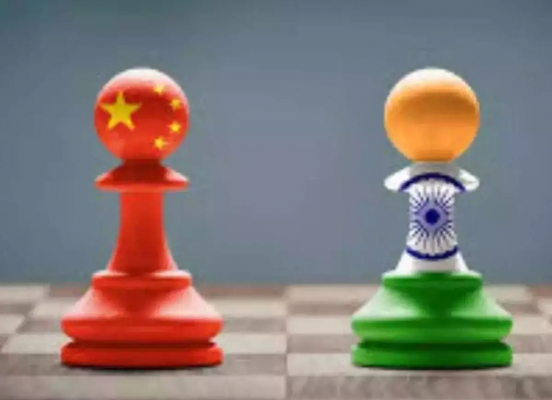
India Rethinks Reliance on Cheap China Imports
Lock, Stock, and No Cheap China Imports: A Shift Towards Strengthening Indian MSMEs

India’s evolving trade dynamics are increasingly shaped by a renewed focus on self-reliance, particularly in light of its heavy dependence on low-cost imports from China. The phrase “lock, stock and no cheap China imports” encapsulates a shift in policy thinking — one that aims to strengthen domestic capabilities, reduce trade imbalances, and create a more level playing field for Indian manufacturers, especially Micro, Small, and Medium Enterprises (MSMEs).
For years, Chinese imports have filled shelves across Indian markets — from electronic components and toys to machinery and household goods. Their affordability and scale made them attractive, especially for small traders and businesses seeking low-cost inputs. However, this dependence came with long-term challenges: a widening trade deficit, vulnerabilities in supply chains, and competitive pressures on domestic producers. In 2023, India’s trade deficit with China neared $85 billion, prompting deeper reflection on the sustainability of such a trade structure.
In response, India has begun recalibrating its approach. Policy measures such as Production-Linked Incentive (PLI) schemes, quality control norms, and restrictions on specific Chinese imports indicate a move towards encouraging domestic production and reducing over-reliance on a single source. At the same time, investments are being made in developing local manufacturing ecosystems — including electronics clusters, toy parks, and textile hubs — to foster self-sufficiency.
For Indian MSMEs, which have often found it difficult to compete with mass-produced, low-cost imports, this shift brings both challenges and opportunities. On one hand, a reduction in cheap imports could open up space for local products to gain market traction. On the other hand, MSMEs will need support to scale up, innovate, and meet quality standards. Access to finance, better infrastructure, simplified regulations, and upskilling initiatives will be essential to help them transition effectively. The goal is not a blanket rejection of global trade, but rather a balanced strategy that builds resilience into India’s supply chains. Certain sectors still depend on imported inputs, and a sudden decoupling could cause disruptions. A phased, carefully managed shift — backed by domestic capacity-building — offers a more sustainable path forward.
In this context, “lock, stock and no cheap China imports” reflects more than just a trade stance; it signals an intent to nurture homegrown capabilities. As MSMEs take on a larger role in India’s industrial landscape, empowering them to compete fairly and sustainably is not only beneficial but necessary for long-term economic growth.

You may also like