India gets ready to launch a national carbon market

The Indian government has green-lighted the creation of a national carbon market that will be key to decarbonizing heavy industry and helping shape international carbon trading. A planned national carbon market for India, the world’s third-largest emitter, could become one of the biggest mitigation experiments ever attempted, getting the country on track to meet its net-zero greenhouse gas emissions goal by the promised date of 2070.
As part of its updated commitment under the Paris Agreement, the country aims for non-fossil fuels – solar and wind but also hydro, which until recently was not classified as renewable due to its environmental impacts, and biomass – to make up 50% of its power generation capacity by the end of the decade. Yet India is struggling to dial back its dependence on fossil fuels, with coal still providing around 70% of total power generation.

To drive down fossil fuel use, India is now eyeing a national carbon market. In its most recent energy bill, the Indian government green-lighted the creation of a “carbon credit trading scheme”, whereby polluters exchange credits equivalent to a certain amount of emissions. According to the bill, the government will issue carbon credits to entities such as businesses or other institutions that choose to register under the scheme. Scheme members will be free to sell and buy credits to meet their individual carbon budgets.
“A carbon market creates an incentive for more sectors and individual corporations to transition [to low-carbon fuels and operations],” says Vibhuti Garg, an energy economist at think tank the Institute for Energy Economics and Financial Analysis (IEEFA). Companies that find it hard to decarbonize their operations for lack of capital can still meet their climate goals by buying carbon credits on the market, she adds. Micro, small and medium enterprises (MSMEs) are one example.
MSMEs account for around 45% of India’s manufacturing output and 40% of its exports. While their largely informal nature makes it difficult to estimate their carbon footprint, a 2016 inventory found the sector is responsible for roughly 6% of India’s total emissions. Emissions from India's manufacturing industries have doubled in the past 15 years
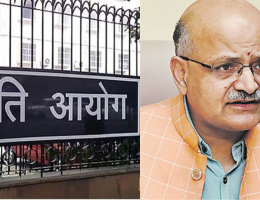
“We are starting with the major polluting sectors, such as power, steel, cement and other heavy industries, and over time we will include smaller industries too,” says Abhinav Trivedi, an energy consultant with NITI Aayog
With more than 1,000 projects registered under the UN Clean Development Mechanism, India is currently one of the world’s biggest exporters of carbon credits. However, a lack of robust monitoring has sometimes led to credits being generated by projects of little environmental value. In the capital Delhi, a controversial waste-to-energy plant has collected carbon credits for years despite being under fire for polluting air and soil with toxic emissions and discharge. For industries who cater to domestic markets there is no way you can pass on that increase [in the cost of production] to customers, a fully-fledged carbon market is going to take a while.
Source: https://www.energymonitor.ai/

You may also like