Amazon Cuts Seller Fees: What It Really Means for Small Businesses in India

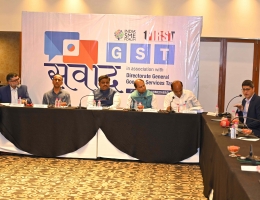
India SME Forum recently hosted Mr. Gaurav Bhatnagar, Director of Sales at Amazon India, for a fireside chat on Amazon’s landmark seller fee revision. In conversation with Mr. Vinod Kumar, President of India SME Forum, Mr. Bhatnagar explained what has changed, why Amazon introduced the revision, and what it means for MSMEs selling online.
Mr. Vinod Kumar began by noting that Amazon has announced fee revisions before, but this time the change appears more significant. Responding to this, Mr. Bhatnagar said the decision is rooted in a simple belief that has guided Amazon since the beginning: when sellers succeed, Amazon succeeds. He explained that the fee revision is designed to make selling more viable for small businesses by lowering the cost burden and improving predictability.
The most important change is the expansion of Amazon’s zero referral fee programme. Earlier, the programme covered products priced below Rs 300. From March 16, Amazon expanded this benefit to cover all products priced under Rs 1,000. According to Mr. Bhatnagar, this represents a tenfold increase in coverage, expanding from 1.2 crore products to 12.5 crore products across more than 1,800 categories. For sellers, this means that a much larger share of their catalogue can now be sold without paying commission to the platform.
Amazon has also reduced Easy Ship fees by more than 20 percent for products priced under Rs 300. Easy Ship is Amazon’s pickup service, where orders are collected directly from the seller’s premises. Mr. Bhatnagar pointed out that this is especially helpful for small enterprises operating from homes, workshops, or small manufacturing units, where arranging cost-effective logistics is often a major challenge. Taken together, Amazon estimates that sellers may see savings of up to 70 percent on their total cost of selling.
To illustrate the impact, Mr. Bhatnagar shared examples in rupee terms. A seller listing a fashion jewellery necklace priced at Rs 900 could now save close to Rs 200 per unit. A seller selling earphones at Rs 800 could save around Rs 139 per unit, which is more than a 50 percent reduction in fees. Even sellers in the low-price segment benefit, as a seller offering a t-shirt priced at Rs 299 can save an additional Rs 15 per unit. Mr. Bhatnagar noted that such savings can significantly influence how aggressively a small business experiments with new products and inventory.
When asked whether the changes benefit new sellers more than existing sellers, Mr. Bhatnagar said both groups stand to gain. New sellers now face a lower entry barrier, and Amazon has also introduced additional incentives worth up to Rs 41,000, including advertising credits, fulfilment support, and rewards for building product selection. For existing sellers, the impact depends on their price segment. Sellers in the Rs 0–300 range can price more competitively and drive repeat purchases, while sellers in the Rs 300–1,000 segment can expand their catalogue and compete across more price points.
A key concern raised by Mr. Vinod Kumar was whether the fee cuts might be temporary. Mr. Bhatnagar clarified that this is not a promotional offer and is not time-bound. He said Amazon has redesigned its cost architecture by identifying inefficiencies and restructuring operations, making this a long-term change. This stability, he added, gives sellers confidence to plan pricing, inventory, and growth.
Beyond fees, Mr. Bhatnagar highlighted the rising demand from tier two and tier three markets, where customer purchasing is becoming more consistent. He also pointed to AI-powered tools that allow sellers to generate accurate, search-optimised listings by simply uploading product photos. Amazon has pledged to help over 15 million SMEs benefit from artificial intelligence. On policy, he stressed the need for GST simplification, since many small sellers struggle to register across multiple states, limiting their ability to store inventory closer to customers.
Key takeaways for MSMEs are clear. Selling on Amazon has become cheaper and more predictable, especially for products priced under Rs 1,000. Shipping costs for low-value products have also been reduced through lower Easy Ship charges. The savings can be reinvested into pricing, inventory expansion, or marketing. Importantly, Amazon has positioned the revision as a permanent structural change rather than a short-term promotion. New sellers also gain from additional incentives and support. Finally, with technology adoption and GST reforms moving forward, MSMEs may find it easier to scale nationally and access wider markets.

You may also like