Decoding the Draft Policy for E- Commerce - Maharashtra
47.78 lakh MSMEs could lose their production targets because of the draft rules

93% sellers in Maharashtra want further deliberation on the draft rules
Maharashtra, the country’s economic powerhouse, has the fourth-highest concentration of small businesses in the country with an 8 percent share of India’s 6.3 crore MSME base. The state has around 47.78 lakh MSMEs out of which 47.60 lakh are micro enterprises and 17,000 are small enterprises. The state provides a total employment to 90.77 lakh people who own and indulge in small and medium business processes.
The newly launched MSME Prerana Programme in Maharashtra aims to develop the financial and managerial capabilities of the MSME entrepreneurs, apart from creating awareness on various initiatives for small and local businesses in the state. However, the recently issued amendments to draft e-commerce rules will restrict and limit the optimum potential of small businesses aiming to leverage online and e-commerce platforms for business practices. If the draft e-commerce rules are implemented in its present form, the entire startup sector relying on online platforms will be disrupted as it causes multiple hassles for small businesses. According to a recent poll conducted by the India SME Forum 93% sellers in Maharashtra are of the opinion that the draft e-commerce rules need to be reconsidered.
The amendments in the rules seek to ban flash sales, bring logistics providers into e-commerce ambit, put an entry barrier on entering marketplace models and more importantly push consumers to offline markets for purchase. As the bulk of consumers in India are from the middle class, these promotions enable them to buy quality products at competitive prices from the safety of their homes and maintain social distancing norms. The rules also propose the appointment of a grievance officer, a chief compliance officer, and a nodal contact person for 24×7 coordination with law enforcement agencies. Moreover, it is mandatory for e-commerce entities to register with the Department for Promotion of Industry and Internal Trade (DPIIT).
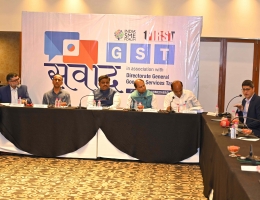
Experts have also raised concerns about how these rules, if implemented, can have an obstructive impact on the economic development of the country with respect to job opportunities, scope for the growth of MSMEs, global investments, and consumer experience. Sharing his opinion on this, Mr. Vinod Kumar, President, India SME Forum, said, “The amendments increase compliance burden on e-commerce entities and make the marketplace inaccessible to small and medium businesses who depend on these entities for sustenance. It is important for the government to revisit these rules and detangle the complexities.”
Ms. Vineetha Hariharan, Public Policy Expert, highlighted, “The compliance officer requirement for all e-commerce entities irrespective of size is too much to ask for. Registration with DPIIT is going to lead to multiplicity of registration which will inconvenience MSMEs. There should ideally be one umbrella registration. All ministries need to have a dialogue together when it comes to making these rules.”
Shri. Tridib Bhattacharya, Founder, Astramind Consulting, stressed, “The e-commerce share of global trading rose from 14% in 2019 to 17% in 2020. We want SMEs to adopt a growing platform. On Amazon and Flipkart, 2/3 revenue comes from MSMEs. E-commerce needs less barriers and priority should be given to digital readiness. The focus of policies should not strictly be on consumers. Even sellers need encouraging policies because that will eventually lead to the benefit of consumers.”
Mr. Rajendra T. Gangan, Founder & CEO, Online Manufacturing.in, stated, “Manufacturing is anyway difficult in India. Policies should help in ease of doing business be it offline or online. Too many restrictions will prevent manufacturers from staying in business and they will move to trading.”
Ms Nidhi Saraf, Founder & CEO, Key Venture, said, “The startup ecosystem didn’t exist before 2010 and primarily got activated via e-commerce. The draft rules need to deal with different players as per size.”
Shri Pratik Vaidya, Director, Karma Management Consultants, said, “One size fits all is not going to work. Smaller players need some hand-holding and some policy leniency as opposed to the big boys. Mis-selling should be seen more broadly. We see ads on tv where the effect of a product is hyped and, say, Tata Sky, is not held liable. So why should e-commerce players be held liable which is what these draft rules propose.”
Key concern areas highlighted by industry experts:
- Ambiguous and overreaching measures
The amendments aim to ban discounted sales on e-commerce platforms which allow many small sellers, artisans, weavers, craftsmen, homemakers to sell their goods around festive seasons at attractive prices. These sales are a big source of revenue for small businesses and if the changes are approved, these can hurt consumers as well as local and household sellers. Additionally, ban on these sales foster a demarcation between physical and online retail. Sales in the offline marketplace doesn’t go through the same amount of scrutiny as is placed on online platforms.
- Cause unnecessary disruption and create entry barriers
Online platforms provide small sellers an opportunity to showcase their local products with a wider set of audience. Issued amendments like mandatory registration with DPIIT will create stringent burdens for online platforms, which may force them to change the way they conduct their business. This will, in turn, impact sellers, who will not be able to use such platforms to their advantage.
- Compliance burdens can break MSMEs and startup ecosystem
The changes will also affect extended support levied by e-commerce platforms for assurance of smooth business transactions like transport, shipping, delivery, and other support service providers associated with the same. Currently, small sellers are able to avail these support services at competitive prices due to the low-cost business model offered by online platforms. Due to the increased compliance burden of support service providers, small sellers will be unable to avail these services at cost-effective rates.
- Ease of doing businesses and volatility
The appointment of officers, registration formalities, and submissions of proofs and documents will affect small sellers who conduct business through their own websites. Small businesses don’t have the appropriate means to abide by the norms proposed by the new guidelines which makes the online marketplace inaccessible to them and disrupt the ease of doing business.
The participating sellers and India SME Forum (ISF) were in consensus that the draft rules will cause irrevocable damage to MSMEs. Having withered two waves of a devastating pandemic, MSMEs need all the support they can get from policy makers. The draft rules are not only counterproductive but will be more damaging in the long run than COVID itself since these rules will be permanent. In this regard, the sellers and ISF have agreed to approach the government and make their voices heard before the 21 July deadline.

You may also like