How a new trade agreement can help Indian small businesses expand globally if they act early and str
India–New Zealand FTA: Turning Policy Into Opportunity for Indian MSMEs

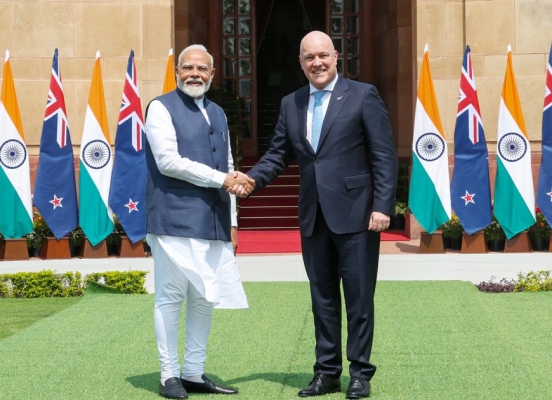
As global trade faces rising uncertainty, India’s strategy of securing reliable and complementary trade partnerships has gained urgency. The recently finalized India–New Zealand Free Trade Agreement (FTA) reflects this approach. More importantly, it creates a clear opening for Indian MSMEs and entrepreneurs by aligning India’s manufacturing and services strengths with New Zealand’s market gaps.
From Barriers to Access
Before the FTA, trade between India and New Zealand remained modest. Indian MSMEs faced high import tariffs, complex customs procedures, and strict compliance requirements, making market entry costly and uncertain. Smaller exporters, with limited resources, often found it difficult to justify the risk. As a result, many MSMEs focused on traditional markets in Asia, Africa, or the Middle East, while developed markets like New Zealand remained largely untapped despite offering stable demand and higher value realization.
The India–New Zealand FTA aims to reduce or eliminate tariffs on a wide range of goods and improve access for services. It also focuses on simplifying customs procedures, improving transparency, and strengthening cooperation in investment and technology.
From a policy perspective, this agreement aligns with India’s broader effort to ensure that FTAs are not just beneficial for large corporations but also accessible to MSMEs. Reduced duties directly improve price competitiveness, while clearer rules reduce compliance burdens for small exporters.
Why New Zealand Needs Trade Partners Like India
New Zealand has a small domestic manufacturing base and relies heavily on imports for a wide range of products. While the country is globally competitive in dairy, meat, wool, agricultural technology, and niche food products, it lacks scale in manufacturing, processed foods, engineering goods, pharmaceuticals, textiles, and cost-efficient IT services.
This makes New Zealand a natural market for Indian MSMEs, which specialize in value-driven manufacturing, diverse food processing, affordable engineering solutions, and globally competitive digital services.
Indian MSMEs are well-positioned to supply textiles and garments, pharmaceuticals and medical supplies, engineering goods, auto components, electrical equipment, processed foods, spices, ready-to-eat products, handicrafts, and wellness products. In services, India's strength in IT, software support, professional services, education support, and back-office operations matches New Zealand’s demand for cost-effective and skilled solutions.
At the same time, Indian entrepreneurs can import high-quality dairy inputs, agri-technology, food processing know-how, and sustainability solutions from New Zealand, supporting domestic value addition and product upgrading.
How MSMEs Can Actually Use the Agreement
To benefit from the FTA, Indian MSMEs must actively align with its provisions. Products must meet the Rules of Origin, which require a defined level of value addition in India. Exporters will need to obtain a Certificate of Origin from authorized bodies to claim preferential tariffs in New Zealand.
Compliance and quality standards will play a critical role. New Zealand’s market places strong emphasis on product quality, safety, packaging, and sustainability. MSMEs that upgrade standards and documentation will be best positioned to benefit. Government schemes supporting technology upgradation, quality certification, and export readiness can help reduce this transition cost.
A Strategic Step in India’s MSME Trade Vision
The India–New Zealand FTA is more than a diplomatic milestone. It is a policy-backed opportunity for Indian MSMEs to integrate into global value chains. However, the real benefits will accrue to those businesses that prepare early, understand the rules, and align with government export support mechanisms.
For Indian MSMEs and entrepreneurs, this agreement represents a clear message: global markets are opening, and policy support is in place. The next move lies with the businesses themselves.

You may also like