THE FIRE NEXT DOOR : And Finally, a Little RELIEF

From Shipping Routes to Shop Floors
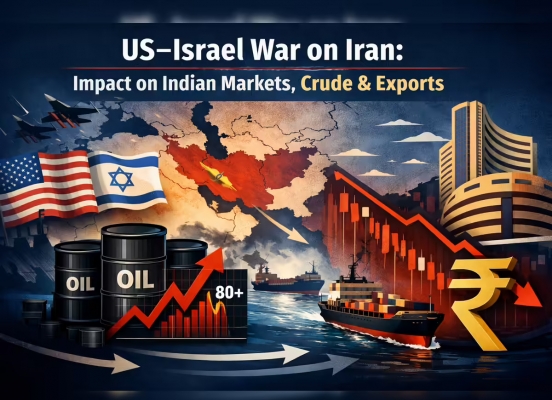
A war thousands of miles away rarely feels real to a small business owner in India until shipments get delayed, costs begin to rise, and payments stop coming in. The ongoing Iran-US conflict of 2026 is not just a geopolitical standoff; it is, in many ways, a supply chain war, one that is quietly disrupting trade routes, inflating costs, and tightening cash flows for businesses far removed from the battlefield. For India’s MSMEs, the impact is not abstract, it is immediate and deeply personal.
Global trade depends on predictability. Ships follow fixed routes, deliveries run on schedules, and businesses plan production around these timelines. But when conflict turns key maritime corridors into risk zones, that predictability disappears overnight. The Strait of Hormuz, through which a significant portion of the world’s oil and trade flows, has become a zone of uncertainty. Ships are being rerouted to avoid risk, insurance premiums have surged, and freight rates have doubled or even tripled. Transit times have increased, and for MSMEs, this means delayed deliveries, stuck consignments, and working capital locked in transit. A small textile exporter who once delivered goods in two weeks may now take a month, while bearing higher logistics costs that buyers often refuse to absorb. What was once a profitable order can quickly turn into a loss.
At the same time, rising oil prices are triggering a chain reaction across the economy. Fuel becomes more expensive, transportation costs increase, electricity bills rise, and even packaging materials, many of which are derived from petrochemicals, become costlier. For MSMEs, this creates a twin cost crisis. On one hand, production becomes more expensive due to higher fuel, power, and input costs. On the other, their limited pricing power makes it difficult to pass these increases on to customers. An auto-component manufacturer, for instance, faces rising steel and fuel costs but may be locked into contracts that prevent price revisions. Similarly, textile units see higher expenses in dyeing and processing, while ceramic and food processing clusters experience rising energy costs that push up per-unit production expenses. To cope, many small businesses are scaling down operations, reducing working hours, or delaying deliveries, measures that help them survive in the short term but weaken long-term growth.
The disruption does not stop at energy; it extends deep into raw material supply chains. War-driven uncertainties are creating shortages and price volatility in key inputs such as plastics, chemicals, and synthetic fibres. Prices fluctuate unpredictably, making it difficult for MSMEs to plan production or manage costs effectively. Unlike large firms, they lack the financial buffers to absorb sudden spikes or stockpile materials. A ceramic unit dependent on gas-fired kilns struggles with rising fuel costs, while a textile manufacturer grapples with volatile yarn prices. The result is a constant state of uncertainty, where even short-term planning becomes a challenge.
The Cash Flow Crunch and Collapsing Demand
Perhaps the most severe impact, however, is financial. MSMEs operate on tight cash flow cycles, money from sales funds the next round of production. When shipments are delayed and payments are postponed, this cycle breaks down. Exporters today are facing a combination of delayed deliveries, late payments, and higher upfront costs. Currency volatility is further increasing the cost of imports, adding another layer of financial pressure. As working capital gets locked in transit or stuck at ports, businesses are forced to rely on short-term borrowing, often at higher interest rates. This creates a dangerous cycle of rising costs, delayed inflows, and increasing debt, pushing many MSMEs toward liquidity stress.
Compounding these challenges is weakening demand from key export markets. The Gulf region, a major destination for Indian MSME exports, is directly affected by the conflict. Buyers are becoming cautious, orders are being delayed or cancelled, and transactions are slowing down. For sectors like basmati rice, textiles, gems and jewellery, and handicrafts, this is a significant setback. In some cases, shipments are stuck at ports, with large quantities of goods awaiting clearance. This not only blocks inventory but also disrupts entire business cycles, particularly for seasonal or niche exporters. A handicraft exporter may lose a crucial festive season, while a rice exporter faces mounting storage costs and delayed payments.
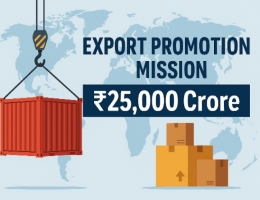
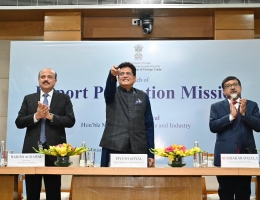
Recognising the scale of disruption, the Government has introduced a targeted response under the Export Promotion Mission (EPM). The newly approved RELIEF - Resilience & Logistics Intervention for Export Facilitation is designed to cushion exporters against the ongoing shocks arising from geopolitical tensions. The intervention specifically addresses logistics disruptions and rising costs in the Gulf and West Asia maritime corridor, offering timely and focused support where it is needed most.
The RELIEF initiative will be implemented with an approved outlay of ₹497 crore under the Export Promotion Mission, with ECGC acting as the nodal agency for risk coverage and reimbursements, supported by a real-time dashboard to track claims and fund utilisation. Covering both past and future shipments, the scheme ensures continuity in exports amid disruptions, while periodic reviews by the EPM Steering Committee allow it to remain responsive to evolving geopolitical conditions. With a strong focus on MSMEs, RELIEF offers critical support against rising freight costs, shipment delays, and payment uncertainties.
What makes this policy response particularly significant is its recognition of a new reality: global conflicts are no longer distant events, they are direct economic shocks for small businesses. While RELIEF may not eliminate all challenges, it provides a much-needed cushion, helping MSMEs navigate uncertainty and sustain export momentum.
In essence, the Iran–US conflict is not just a geopolitical event but an economic transmission mechanism quietly squeezing India’s MSME sector. It is a reminder that in today’s interconnected world, no business is too small to be affected by global disruptions, where a distant war ultimately translates into rising costs, delayed payments, and shrinking demand, turning a global crisis into a local balance sheet challenge.

You may also like