"We're Out": Malaysia Becomes First Country to Abandon US Reciprocal Trade Deal

Malaysia has become the first country to walk away from a bilateral trade agreement it signed with the United States under Washington's reciprocal tariff strategy and a landmark court ruling is to blame.
On March 15, Malaysia's Investment, Trade and Industry Minister Johari Abdul Ghani made it official. The Agreement on Reciprocal Trade (ART) between Malaysia and the US was no longer valid, he confirmed, following a US Supreme Court ruling in February that struck down the broad tariff measures introduced by President Donald Trump. His words left no room for ambiguity: "It is not on hold. It is no longer there, it's null and void."
How Did We Get Here?
Malaysia and the US had signed the ART on October 26, 2025, under which tariffs would come down from an initial 47% to 24%, and then to 19%, along with zero duty on certain products. Malaysia had also agreed to provide deeper market access and policy concessions to the US in return.
The deal was essentially a bargain struck under pressure — Malaysia accepted certain conditions in exchange for lower tariffs on its exports. The agreement covered about 12% of Malaysia's exports to the US.
But on February 20, 2026, everything changed. The US Supreme Court ruled that the president did not have the authority under the International Emergency Economic Powers Act to impose broad tariffs, removing the legal foundation of the agreement. With the legal basis gone, the deal effectively had nothing to stand on.
What Happens Now?
Malaysia is currently subject to a global tariff of 10%, applied under Section 122 of the US Trade Act of 1974. Within a five-month window, the US will review whether to use Section 301 to determine a new tariff rate.
That review is not just a formality. Key Malaysian export sectors that could be affected include electrical and electronics, oil and gas, plantation commodities such as palm oil, gloves, and other rubber-based products.
Could Others Follow?
Malaysia may not be alone for long. The European Union, Japan, South Korea, Vietnam, Indonesia, Bangladesh, and India had accepted tariffs of 15–20% and offered significant concessions. But after the court struck down the reciprocal tariff policy, Washington imposed a uniform 10% tariff on all trading partners meaning countries with trade deals now receive the same treatment as those without one. The incentive to stay in such deals has largely disappeared.
Back home, the move has sparked political debate. A group of eight Malaysian MPs questioned whether the government has formally written to its US counterpart to declare the ART cancelled, and whether Washington has confirmed the termination.
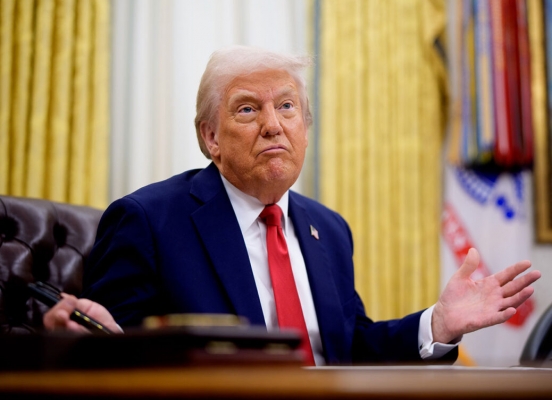
Meanwhile, Trump has threatened to retaliate with "much higher" tariffs against any nation that uses the Supreme Court ruling to dismantle existing trade agreements a warning that will be watched closely by every country still sitting at the table.

You may also like