For decades, industrial robots belonged to giant factories. Now a new generation of compact machines
The Robot on the Workbench: Compact Cobots Are Finally Within an MSME's Reach

Picture a small factory on the edge of an industrial cluster. Every morning, the owner walks the floor and sees the same thing: a skilled worker fastening screw after screw, hour after hour. A robotic arm has crossed his mind more than once. But the answer is always the same. Too costly. Too big. Too complicated.
For many years, that answer was right. Industrial robots were built for huge factories. Small business owners could not afford them, and they did not have space for the heavy safety cages that came with them. For an MSME, "automation" usually meant buying a slightly faster machine, not a robot.
Now that is changing. A recent ETManufacturing report says compact industrial robots are a major trend for 2026 and are already changing Indian manufacturing. Automation is no longer only for big companies. It is reaching MSMEs too, with the promise of easing labour shortages and speeding up production.
Meet the Small Robot With a Big Job
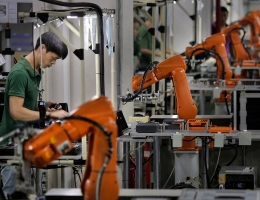
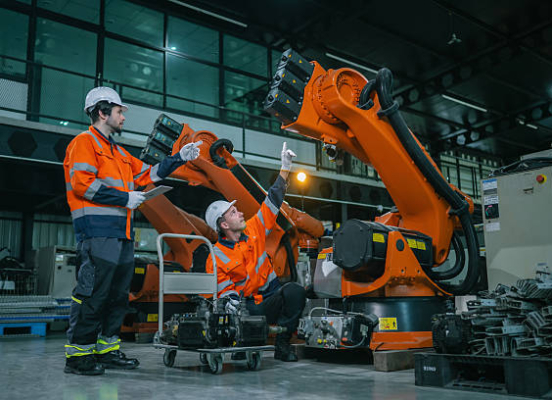
Compact robots are also called collaborative robots, or "cobots". They are small, precise machines made to work safely right next to people. Older robots are big, hard to program and need safety fencing. Cobots are easy to set up and fit into a normal factory floor.
They are best at the "3Ds": work that is dull, dirty or dangerous.
The difference is simple. A traditional robot can cost ₹25-40 lakh or more, needs a safety cage and stays fixed to one task. A cobot costs much less to start with, can be leased, works safely beside your team and can be moved from one workstation to another.
Big-Factory Power, Small-Factory Budget
This changes the game for small businesses. An MSME can now get the same accuracy and consistency as a large factory, at a much lower cost. Cobots can even be fixed on an ordinary workbench, so you do not need a big new setup.
There is another help: Robots as a Service (RaaS). Instead of paying a huge amount upfront, you rent the robot every month. You can use it for placing components, moving materials or packing, and your production line keeps running without a major disruption.
Will a Robot Take My Team's Jobs?
This is the biggest worry for most owners, and current trends say no. Cobots are meant to help workers, not replace them. Their job is to cut wasted time and remove safety risks.
Think of the robot as a helper for heavy lifting and the same action repeated all day. Your people are then free to do work that needs skill, such as checking quality, supervising machines and final assembly.
Four Smart Steps Before You Spend a Rupee
Do not buy a robot just to look modern. Buy one to fix a problem.
- Pick one repeated task. Choose a job, like screw fastening or loading a machine, that slows your output.
- Count the full cost. The robot arm is only one part. Add the gripper and software, and ask the seller for the total cost of getting it running.
- Ask about leasing. If cash is tight, a rental model lowers your risk.
- Check the payback time. For MSME automation, 12 to 18 months is usually considered healthy.
Your First Move Starts Small
Robots are becoming everyday tools for small businesses. As profit margins shrink, doing more with the same effort is your biggest advantage. The smartest step today is to pick one repeated task, work out the numbers, and see how a cobot can help your team work faster and safer.

You may also like