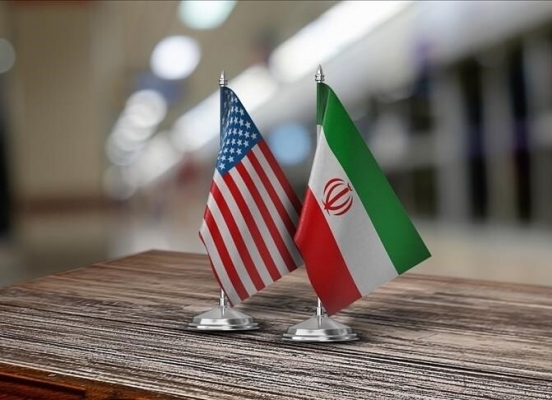
The US-Iran ceasefire has reopened the Strait of Hormuz. For India's fuel tankers, it ends a chapter
When the Strait Closed, India's Diplomats Were Ready. Its Small Exporters Were Not.

On the morning of June 19, 2026, a ceasefire memorandum between the United States and Iran was signed, ending four months of conflict that had kept the world's most consequential waterway, the Strait of Hormuz, either closed or dangerously unpredictable. By afternoon, the headlines were already writing themselves. Markets rallied. Oil futures fell. Shipping executives issued careful statements about the gradual restoration of normal operations. The diplomatic machinery that had been working in overdrive since late February allowed itself a quiet moment of relief.
The Strait of Hormuz is not merely a shipping lane. It is the arterial passage through which roughly a fifth of the world's oil travels every day, a narrow, 33-kilometre-wide corridor between Iran and Oman, flanked by some of the most contested waters on earth. When it is open, global commerce breathes freely. When it is not, the consequences radiate outward with a speed and severity that no economy, however large or well-insulated, can fully absorb.
For most of the world, June 19 closed a chapter: the strait was shut, the strait is now open, the disruption is over.
For India, the story is considerably more layered, and considerably more uncomfortable.
A Diplomatic Triumph With a Very Narrow Beneficiary
When Iran effectively shut the strait to vessels it considered linked to the war effort in late February, India did what it has, over decades, quietly learned to do well: it picked up the phone to Tehran.
The relationship between New Delhi and Tehran is one of those understated diplomatic assets that rarely makes headlines until it suddenly matters enormously. India leaned on that goodwill to negotiate individual clearances, ship by ship, cargo by cargo. LPG carriers and oil tankers, vessels like Green Asha, BW Tyr, BW Elm, and Jag Vasant, made it through, carrying tens of thousands of tonnes of fuel through waters that were, by any legal and military definition, a war zone.
It was not a guarantee of safe passage. It was a negotiated trickle, and a fragile one. At one point, 22 Indian-flagged vessels carrying over 600 Indian seafarers were stranded west of the strait, awaiting clearance that might or might not arrive. Three Indian sailors were killed in conflict-related incidents. One went missing.
And critically, almost exclusively, this arrangement applied to energy cargo. The tankers carrying oil and LPG had a backchannel. The container ships, bulk carriers, and feeder vessels that carry the goods India's small and medium exporters actually make and sell to the world did not.
That distinction, between what diplomacy could protect and what it could not reach, is where this story truly begins.
The Bill That Landed on the Wrong Desk
The damage to India's MSME export sector during these four months did not come from ships being physically prevented from sailing. It came from something subtler, and in some ways more insidious: uncertainty, and the price that global markets charge for it.
War-risk insurance is the crux of the matter. Before the conflict, premiums on vessels transiting the Gulf region amounted to a small fraction of a vessel's value, a manageable, routine cost. Once hostilities began, those premiums surged to several percentage points of vessel value, in some cases adding millions of dollars to the cost of a single voyage. For large energy companies with long-term contracts and government backing, that cost could be absorbed or negotiated around. For a small textile exporter in Tirupur who had quoted a price to a buyer in Frankfurt three months earlier, it was simply devastating.
Add to that the behaviour of international buyers, who, quite rationally, began hedging by placing smaller orders more frequently, by seeking suppliers closer to home, or by simply waiting out the uncertainty, and the compounding pressure on India's MSME exporters becomes clear.
The numbers bear this out. The Confederation of Indian Textile Industry reported textile and apparel exports falling 14% month-on-month in March, and another 3.5% in April. Apparel exports were down nearly 12% year-on-year. Polyester costs rose roughly 25% during the conflict, dragging cotton prices upward alongside them, pressure significant enough that the government suspended import duty on cotton until October just to give the sector breathing room. Tirupur, which accounts for around 90% of India's knitwear exports and represents hundreds of thousands of livelihoods, watched order flows dry up as global buyers grew wary of delays and mounting costs.
Engineering exports told a parallel story. The Engineering Export Promotion Council reported a 50% year-on-year decline in exports to West Asia and North Africa in March alone, with April falling a further 18%, down to $1.10 billion from $1.34 billion the previous year. The UAE and Saudi Arabia, two of India's most important regional markets, softened sharply as conflict anxiety rippled through Gulf economies.
These are not abstract figures. Behind each percentage point is a factory running at reduced capacity, a shipment delayed or cancelled, a payment that arrived late or not at all, and a margin that was already thin now stretched to breaking.
Reopening Is Not the Same as Recovery
The June 19 memorandum is genuinely good news. The US naval blockade is to be lifted within 30 days. Both parties have 60 days to negotiate a lasting settlement. For a conflict that felt, at points, frighteningly escalatory, an off-ramp of this kind is no small thing.
But shipping executives and maritime analysts have been measured in their optimism, and they are right to be. Insurance premiums do not reset the morning after a ceasefire is signed, underwriters rebuild confidence slowly, on the basis of weeks and months of demonstrated calm, not a single document. Mines laid in contested waters must be cleared. Inspections must resume. The backlog of vessels that waited out the conflict will not vanish; it will simply shift, piling congestion onto ports like Jebel Ali and Colombo as traffic surges through a system still catching its breath.
For India's MSME exporters, this means the worst of the disruption is likely, hopefully, behind them. But the costs will linger well into the second half of 2026. Orders lost to redirected supply chains do not automatically return. Buyers who found alternative suppliers during the disruption will not abandon them overnight.
The Longer Lesson
There is something worth sitting with in this episode: that India's diplomatic apparatus, when it chooses to move with intent and speed, is genuinely capable of protecting national interests in extraordinarily difficult circumstances. The backchannel that kept fuel tankers moving through an active conflict zone was no small feat.
The question it raises, though, is one that India's policymakers would do well to take seriously as they negotiate trade agreements and build export infrastructure for the decade ahead: what is the equivalent backchannel for the exporter in Ludhiana, the knitwear manufacturer in Tirupur, the engineering components maker in Pune?
The geopolitical storm has passed. The recovery of the millions of workers in India's textile mills and engineering workshops, people who never had a tanker clearance to fall back on, now depends on something more durable than diplomatic goodwill: competitive supply chains, resilient insurance frameworks, diversified market access, and the kind of institutional support that meets small exporters where they actually are.
India has shown it can protect what it prioritises. The task now is to widen the circle of what gets prioritised, and to ensure that the next crisis finds its MSME exporters with a backchannel of their own.

You may also like