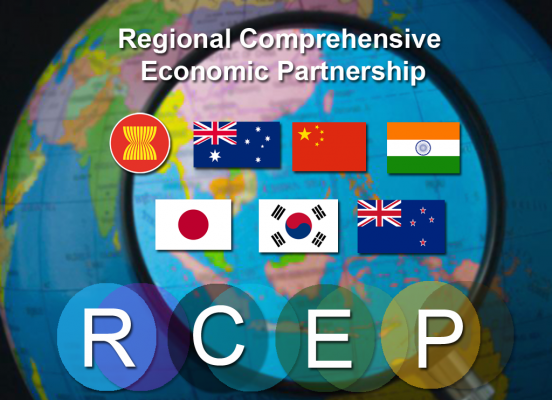
RCEP
India Opts out of Regional Comprehensive Economic Partnership

After RCEP Summit held at Bangkok on 4th Nov 2019, Mr. Vijay Thakur Singh, Secretary (East), Ministry of External Affairs said “India has conveyed its decision not to join the RCEP agreement.India had significant issues of core interest that remained unresolved. The country has participated in good faith in the RCEP discussions and had negotiated hard with a clear eyed view of our interests. In the given circumstances, we believe not joining the agreement is the right decision.”
India has decided not to join the Regional Comprehensive Economic Partnership (RCEP) pact saying it will not “compromise” on its core issues.
Other RCEP members, though, want India to keep its options open. The statement given by Mr. Singh says “India has significant outstanding issues, which remain unresolved. All RCEP participating countries will work together to resolve these outstanding issues in a mutually satisfactory way. India’s final decision will depend on satisfactory resolution of these issues.”
Prime Minister Narendra Modi, in his speech at the Summit, said that his decision of not joining the agreement was guided by the impact that it would have on the lives and livelihoods of all Indians, especially the vulnerable sections. He referred to Mahatma Gandhi and his advice on recalling the face of the weakest and poorest and asking if the steps being considered were of any use to them.
One of the reasons for India’s decision to not join the trading bloc was the growing agitation against the pact not just from the Indian industry but also from farmer groups. Representatives from a large number of industrial sectors, ranging from steel and engineering goods to textiles and plastics, had asked Commerce and Industry Minister Piyush Goyal to protect them against zero-tariff imports, especially from China.

You may also like