
Succession Planning-Key Challenges faced by small businesses

Ease of doing business for MSMEs : According to most of the research carried out on succession planning, it can be conclusively inferred that family-owned businesses are major contributors to GDP across the globe with an estimated share of 70−90 per cent.In simple words, succession planning means a documented strategy that involves identifying individuals (based on set parameters and processes) and deciding on the manner of coaching and mentoring them for leadership roles. While succession planning is required at all levels, however, it becomes critical for leadership roles for an organisation’s survival.
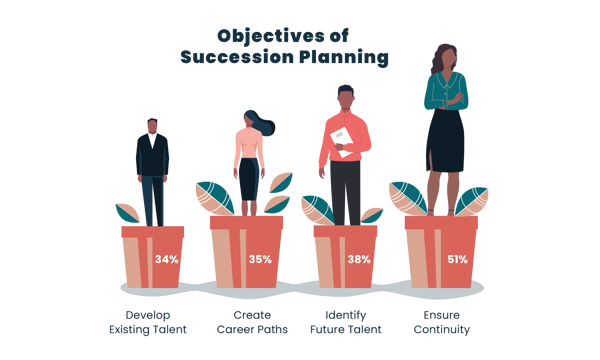
Small-scale, family-owned businesses have unique features and a set of challenges when it comes to succession planning. Some of these are briefly discussed below.
Gen next: Quite a few family-owned businesses have become the world’s largest business giants; many remain ‘small-scale’ but play an equally crucial role.In the Indian context, the next-gen, especially the elder son, is expected to become the head of the family business. This is particularly the case in a small set-up. In such a set-up, the boundary between personal life and business life is blurred. Business conversations are routinely discussed at the dinner table and the next gen is constantly observing and learning business aspects from a young age. This instils a sense of belonging and connection in the next gen. Engaging in open communication and sharing transparent feedback would go a long way in benefiting the next-gen and the business.
Formal induction programmes: In a small set-up, there would not be a formal education or training programme for the next-gen willing to join the business. It would have to learn the ‘ropes of the business’ by spending time with the founder/promoters and interacting with other stakeholders such as employees, vendors, and customers.
Attracting and retaining talent: One of the most critical challenges for a small-scale business is attracting and retaining talent.To address this challenge, developing a talent pool, and having an objective and rewarding appraisal and recognition programme is a must.
Limited resources: In smaller set-ups, most of the time, owners take every decision. They are drowned in day-to-day business affairs and do not have the bandwidth to formulate growth and/or a succession plan. Carving-out specific time to formulate these aspects is of paramount importance for such set-ups.
Another facet of succession planning is passing on the ownership to the next-gen. For cases where the succession of ownership depends on a family’s requirements, a few alternatives, such as giving gifts during the lifetime of the owner, suggesting transmission under a ’Will’ or setting up a private family trust can be considered. Each listed method has its own set of pros and cons and tax implications. A holistic discussion is required to arrive at a plan/process; usually, a combination of these methods is required to ‘fit the bill’. A distinct plan is often devised for the succession of business assets vis-à-vis personal wealth.
Souce : www.financialexpress.com/industry/sme/ Image credits : https://blog.lumenii.co.za/

You may also like