India-Brazil MSME MoU: What It Actually Means for Indian Small Businesses

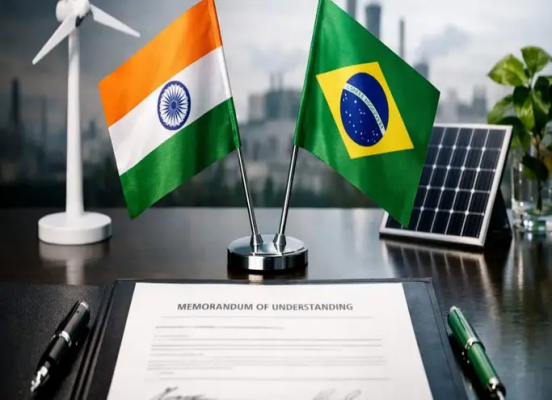
India’s micro, small and medium enterprises (MSMEs) are increasingly becoming central to the country’s global economic engagement. In this context, the signing of a Memorandum of Understanding (MoU) between the Governments of India and Brazil on 26 February 2026 marks an important development. The agreement formally strengthens cooperation in the MSME sector while placing a clear focus on sustainability and green transition. More than a diplomatic gesture, it creates a structured framework through which small businesses from both countries can collaborate, expand, and modernise.
The MoU outlines cooperation in key practical areas: exchange of information and best practices, technology collaboration, promotion of joint ventures and partnerships, and facilitation of participation in trade fairs and business delegations. In simple terms, it provides a government-backed platform for MSME institutions in India and Brazil to actively connect their small business ecosystems. Earlier, such structured engagement was largely limited to larger enterprises; this agreement directly integrates MSMEs into the bilateral economic agenda.
For Indian MSMEs, one of the most immediate benefits is potential market access. Brazil is the largest economy in Latin America and a major member of BRICS, with strong demand in sectors such as manufacturing, agribusiness, renewable energy, and infrastructure. Indian MSMEs operating in engineering goods, auto components, pharmaceuticals, agro-processing machinery, textiles, renewable energy equipment, and sustainable construction materials could find new export opportunities. If supported by buyer-seller meets, trade delegations, and institutional facilitation, the agreement can reduce the entry barriers that typically prevent smaller firms from entering distant markets.
The sustainability element of the MoU is particularly relevant for Indian MSMEs. Many small businesses are facing increasing pressure from global buyers to reduce emissions, improve energy efficiency, and adopt environmentally responsible production methods. Brazil has strong expertise in biofuels, biomass energy, and sustainable agriculture technologies, while India is expanding its capabilities in solar manufacturing, green hydrogen, and energy-efficient industrial systems. Cooperation in these areas can enable knowledge exchange and technology exposure, helping MSMEs gradually upgrade their operations. Access to best practices and cleaner production techniques could support firms in meeting international environmental standards and remaining competitive in global value chains.
From a policy perspective, the MoU aligns with India’s broader strategy of linking MSME growth with sustainability. It complements existing initiatives such as the International Cooperation Scheme of the Ministry of MSME, which supports overseas participation in trade fairs and business events. By integrating green transition goals with internationalisation efforts, policymakers are signalling that export growth and environmental responsibility must move together.
However, the actual impact will depend on implementation. For MSMEs, the key will be whether this framework translates into concrete actions such as sector-focused delegations, virtual B2B platforms, joint pilot projects in green technologies, and simplified information channels about Brazilian standards and regulations. Clear follow-up mechanisms and industry participation will determine whether the MoU delivers measurable outcomes.
The India-Brazil MSME cooperation agreement represents a forward-looking opportunity. By combining access to a major new market with collaboration in sustainability driven sectors, it offers Indian MSMEs a pathway to expand responsibly and strengthen long-term competitiveness. If effectively operationalised, this partnership could help small businesses diversify exports, adopt greener practices, and position themselves more confidently in a rapidly evolving global economy.

You may also like