How OVO’s Solar Initiative Could Inspire a Green Energy Shift for Indian MSMEs

Small and medium-sized enterprises are the backbone of India’s economy, accounting for a significant share of jobs, exports, and GDP, but they also face persistent pressures from rising energy costs and evolving sustainability expectations. In recent years, the Indian government and industry players have aimed to accelerate clean energy adoption across the country from rooftop solar in households to dedicated programmes for businesses, yet MSMEs often remain on the edge of these policy initiatives despite their huge collective power demand and emissions footprint.
In this global context, the launch on 26 February 2026 of a dedicated solar installation service for small and medium-sized businesses by OVO Energy highlights a model that could have inspiring relevance for Indian MSMEs. OVO’s service simplifies and de-risks the process of adopting on-site solar power by bringing together technical design, installation, and financing through trusted regional partners. While this is happening in the UK, the core idea of lowering barriers for smaller firms to deploy renewable energy resonates strongly with what India is already trying to do domestically.
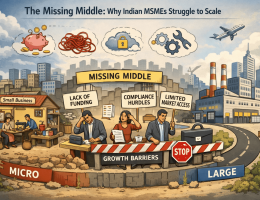
One of the biggest challenges for Indian MSMEs has been access to affordable clean energy solutions and financing. Many MSMEs have struggled with capital constraints, technical complexity, and fragmented installer markets, making solar seem risky and out of reach. These same hurdles are similar to those that motivated OVO’s UK launch, underscoring a universal need for integrated services that reduce upfront costs and simplify project delivery. Successful replication of such models in India could help MSMEs unlock immediate cost savings while moving toward cleaner operations.
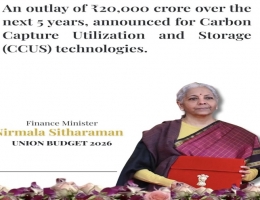
India’s solar ecosystem is already buzzing with government support and policy action that can complement similar service-oriented models. The Union Budget 2026–27 provided customs duty relief on solar glass and battery storage equipment, aiming to cut costs for solar manufacturing and deployment, which could indirectly benefit MSME-oriented solutions. Additionally, state governments like Odisha are actively mobilising thousands of MSMEs into clean energy transitions through subsidies, credit guarantees, and targeted incentives showcased at events like the recent Global Cleantech Expo-Odisha.
Moreover, existing national schemes such as the PM Surya Ghar, Muft Bijli Yojana originally designed to accelerate rooftop solar adoption for households have already surpassed significant milestones, with over 30 lakh installations under its umbrella, indicating strong momentum for distributed solar in India. This demonstrates that with the right combination of policy support and market solutions, rapid solar uptake is very much achievable.
If OVO’s service approach focused on simplicity, localised execution, and clear financial benefit were adapted within the Indian context, it could substantially energise MSME-level solar adoption alongside these government efforts. Indian MSMEs could benefit from tailored financing, reduced technical complexity, and bundled services that fast-track solar deployment without the need for deep internal expertise.
Looking ahead, the potential for a “market-plus-policy” framework that combines India’s robust renewable incentives with private sector delivery mechanisms is promising. Not only would this help MSMEs lower their operational costs and enhance competitiveness, but it would also align with national clean energy targets and strengthen India’s position as a global leader in sustainable economic growth. With innovative models emerging globally and strong domestic policy momentum, Indian MSMEs stand at the threshold of a greener, more resilient future.

You may also like