Air Pollution Crisis: The Hidden $95 Billion Drag on India's MSME Ecosystem

The Invisible Cost of Poor Air Quality on Business Performance
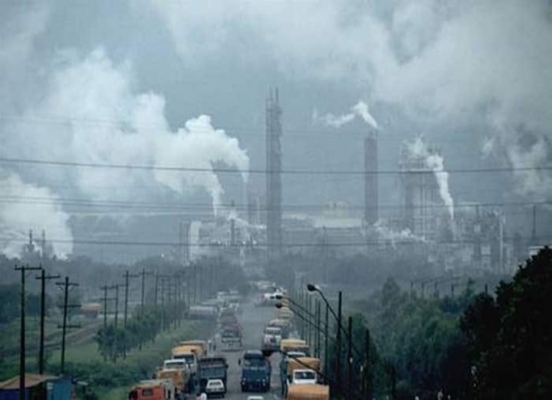
India's average PM2.5 concentration in 2024 stood at 50.6 µg/m⊃3;, nearly 11 times higher than the WHO annual guideline, making India the world's fifth most polluted country. In November 2025, AQI levels in Delhi and neighboring cities reached hazardous levels, crossing 600 in some parts. While public discourse around air pollution typically centers on health impacts and visibility issues, a deeper crisis is unfolding, one that directly threatens India's economic engine: the MSME sector.
Recent research reveals a staggering reality. Air pollution costs Indian businesses approximately $95 billion annually, equivalent to 3% of India's GDP. This amount equals 50% of all tax collected annually or 150% of India's healthcare budget. For MSMEs, which contribute 30.3% to India's GDP and employ approximately 11 crore people, this pollution penalty translates into tangible losses through reduced productivity, increased absenteeism, and diminished operational efficiency.
This challenge aligns directly with the Climate - Proofing SMEs campaign launched at COP30 in November 2025, which recognizes that while SMEs generate more than half of global GDP and emissions, two-thirds already feel climate change impacts yet remain unsupported in the net zero transition. The campaign's emphasis on helping SMEs address emissions and climate risk exposure resonates with India's air pollution crisis, where MSMEs face the dual burden of contributing to pollution through operations while simultaneously suffering productivity losses from poor air quality. The COP30 framework calls for governments to recognize SMEs as a distinct group critical to climate action and to promote the business case for SME climate action, highlighting that affordable finance, technology access, and capacity-building are essential. For Indian MSMEs, this international framework validates the need for domestic policy support linking air quality improvement with business competitiveness, making clean air not just an environmental goal but a recognized economic imperative aligned with global climate commitments.
The Three-Pronged Economic Impact on MSMEs
The economic burden of air pollution manifests through distinct channels that disproportionately affect smaller enterprises lacking resources to mitigate exposure.
Worker Absenteeism and Healthcare Costs: In 2019, 1.3 billion working days were lost in India, costing $6 billion, primarily due to health impacts forcing employees to miss work. For MSMEs operating with lean teams, even a few days of worker absence can disrupt production schedules and delivery commitments. Small manufacturers cannot easily substitute workers or maintain buffer capacity, making each absence more consequential.
On-the-Job Productivity Decline: Even when workers show up, their performance suffers. Reduced physical and cognitive performance on high pollution days leads to an estimated 8-10?crease in productivity, costing the Indian economy $24 billion in 2019. Software development firms, financial services providers, and manufacturing units requiring precision work see productivity drops seven times higher during pollution spikes. In cities like Noida and Ghaziabad, employees report eye irritation and exhaustion, leading to burnout and increased attrition, challenges that resource-constrained MSMEs can ill afford.
Customer Footfall and Demand Reduction: Retail MSMEs face another challenge as poor air quality keeps customers away. Air pollution leads to a 0.7% annual decline in tourist arrivals, resulting in economic loss of $1.7 billion. For small restaurants, retail shops, and service businesses dependent on walk-in customers, pollution episodes translate directly into reduced sales.
Sectoral Challenges and Policy-Driven Mitigation
Different MSME sectors face distinct pollution challenges. Manufacturing units deal with equipment degradation and maintenance costs, while agricultural MSMEs confront reduced crop yields affecting raw material supply. The IT sector stands to gain $1.3 billion from cleaner air, yet hubs like Gurgaon face talent drain as companies relocate to cities with better air quality.
While systemic solutions require government action on emission sources, MSMEs are adopting immediate measures. Progressive enterprises are installing air filtration systems and implementing flexible work policies during pollution episodes. Government support must evolve to match these needs: financial incentives for air quality infrastructure, credit facilities for health investments, and temporary relief measures like deadline extensions during severe pollution episodes would acknowledge air quality as a legitimate business continuity concern.
Urban planning must integrate industrial policy by encouraging MSME clusters in cleaner areas, developing green industrial corridors, and prioritizing public transport connectivity. States successfully managing air quality gain competitive advantages in attracting investment and retaining skilled workers.
The Path Forward
Research demonstrates that India's GDP would have increased by the full $95 billion annually if safe air quality levels had been achieved, evidence that pollution hinders rather than accompanies prosperity. For India's MSME ecosystem, addressing air pollution is not an environmental luxury but an economic imperative.
Collaborative action across government, industry associations, and enterprises can break this cycle through enforcement of emission standards, transition to cleaner fuels, investment in public transportation, and support for MSME adaptations. As India positions itself as a global manufacturing hub, air quality emerges as a critical competitiveness factor. The $95 billion currently lost to polluted air represents not just a cost but an opportunity, a measure of the economic gains achievable through determined action on air quality.

You may also like