Bilateral Trade
Partnership between India and Russia: SME collaboration

Russia and India both have deeper focus on their Small and Medium Enterprises market this year. The pre-covid target set by the two Governments to reach US$ 50 bn of bilateral trade by 2025 is possible with SMEs collaborating post-covid. There is scope for much greater engagement, given the size of the two economies and the convergence of economic objectives, especially for SMEs in the areas of ICT, ESDM, ITeS, medical technology, defence, Healthcare, Pharmaceuticals and Biotechnologies, Waste Management and Clean Tech & Clean Energy, education, advanced technologies, food industry and others.
India and Russia are aiming to achieve US$30 billion in annual bilateral trade by 2025, an increase on the US$10 billion traded in 2019. Roman Babushkin, the Deputy Ambassador for Russia in New Delhi stated: “The FTA between India and the Eurasian Economic Union is a priority project for all of us and we are moving towards the early conclusion of the agreement.”
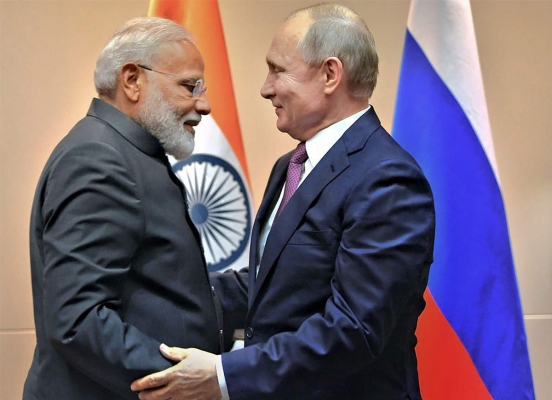
India and Russia are set to ink a pact for cooperation between Micro, Small and Medium Enterprises (MSMEs) of the two countries after the bilateral summit between Prime Minister Narendra Modi and Russian President Vladimir Putin. The agreement aims to promote cooperation between the Small & Medium Enterprises (SMEs) of the two countries. It would provide a structured framework and an enabling environment to the MSME sector of the two countries to understand each other’s strengths, markets, technologies, policies, etc. It also aims to enhance the enterprises to seek cooperation and help each other and also to initiate sustainable business alliances in terms of technology transfers, joint ventures and business partnerships in the MSME sector between the two countries. The pact also covers cooperation in the field of rapid incubation for entrepreneurship development, capacity building, exposure to each other’s market by encouraging participation in exhibitions. This cooperation is expected to open new opportunities for the Indian MSME sector by way of new markets, joint ventures, sharing of best practices and technology collaborations etc.
Russia has a stable legislation aimed at protection of ownership and capital, investors and investments. The recent legislative and regulatory efforts are meant to improve stability and predictability, making the investment climate milder and the business environment more attractive for all players. Tax governance is becoming increasingly consistent with international approaches, integrating the country’s fiscal system into the global tax framework. Favourable tax regime for new investments has been set up in Special Economic Zones and Priority Development Territories.
Major items of export from India include pharmaceuticals, miscellaneous manufactures, iron & steel, apparels, tea, coffee and tobacco. Major items of import from Russia include defence equipment, nuclear power equipment, fertilizers, electrical machinery, steels and diamonds. Both the Governments – India & Russia, have undertaken initiatives to promote bilateral investments; investment cooperation has been envisaged is some priority sectors such as hydrocarbons, power, coal, nuclear power, fertilizers, IT, pharmaceuticals, mineral and metallurgy. The two countries could cooperate in sectors such as energy resources, gold and diamonds, infrastructure development, digital technologies, research and development, pharma, biotechnology and agriculture among others
Development of banking links between India and Russia has witnessed some concrete progress. Several Russian banks have opened their Representative Offices/Branches in India. These include VTB, Sberbank, Vnesheconombank, Promsvazbank and Gazprombank. Similarly, the Commercial Bank of India LLC (JV of two major Indian banks: SBI & Canara Bank) is providing banking services in Russia.
Sectorally, a number of areas have been identified where there is complementarity and India seek to intensify the cooperation: These include: hydrocarbons, IT, pharmaceuticals and biotechnology, metals and minerals, auto components, fertilizers, food processing, construction and engineering services, financial services and machine building.There are significant opportunities for Russian companies in India particularly in the area of construction, major infrastructure projects such as dedicated freight corridors and industrial clusters, smart cities and engineering services. Russian companies are encouraged to avail of the opportunities under the Make in India initiative and to explore the possibility of technology transfer and joint manufacturing in India given the advantage of skilled labour force and the available resources in India. On the other hand, Indian companies are encouraged to explore major investment options in Russia especially in natural resources such as coal, fertilisers, hydrocarbons, minerals and rare earth metals.
Military/Defense – These ties should transition from the traditional importer model to a more symbiotic relationship through joint defense R&D and manufacturing. For instance, the Indian defense industry can selectively outsource manufacturing or have joint projects to bring down the costs of India-made parts and accessories for the Russian military. Increased private sector cooperation should be encouraged for defense materiel development under the new DPrP policy ( Draft Defence Production Policy )in India.
Energy – Russian and Indian private companies are experts in engineering; they should invest in joint nuclear projects beyond reactor construction in India. One could be a private Indo-Russian consortium, set up at the initiative of the two governments, to construct nuclear power plants in third nations, particularly in Africa, that are seeking inexpensive civilian nuclear power. Opportunities also exist for India and Russia to jointly mine uranium and produce low-cost renewable energy on Indian soil.
Trade and Investment – Bilateral trade will benefit from the introduction of new mechanisms to promote private investments and businesses, in addition to the existing ones. To augment the impact of the Russia-India Innovation and Modernization Fund, the two governments can jointly set up an Entrepreneurs’ Council to encourage cooperation between medium-sized yet fast-growing businesses.
Science and Technology –The two governments can create a set of initiatives and a preferential environment for the exchange of practices which will drive collaboration between mid-sized businesses in target sectors like IT, pharmaceutical research, and nano- and biotecnology. India’s Ministry of Science and Technology can also devise more robust ways of scientific cooperation with Russia, such as setting up a BangaloreSkolkovo (Russia’s up-and-coming innovation city) hub for joint research and technology development, followed by hubs in India’s other IT centers. [Russia’s largest global technology hub, Skolkovo Innovation Centre, is on a hunt in India to incubate start-ups in areas such as big data analytics, biomedical devices and Internet of Things, a technology where devices communicate with each other intelligently. It is also looking to incubate companies in areas as diverse as energy management, space and nuclear technologies.
What can Indian businesses sell to Russia?
This is good news for Indian producers of generic medicines, tea, canned vegetables, grapes and raisins, rice, coffee and coffee extracts, and related consumables, such as spices, herbs, and essences.
What can Russian businesses sell to India?
Exports of beans to feed Indian consumers have grown to US$14.5 million from just US$2 million in the past two years, while sales of sunflower seeds and other oil-producing crops have also increased. Russian radar equipment as well as compasses and other navigational products also became important exports to India, while areas of growth include uncut diamonds, silver, mineral and chemical fertilizers, crude and petrochemicals, as well as machinery, synthetic rubber, polymers, plastic products, paper and other products.
SECTOR OPPORTUNITIES
The two countries have stressed their need to develop trade, with Prime Minister Modi and Russian President Putin pledging to raise bilateral trade to US$30 billion by 2025.
While India and Russia may be far apart from each other geographically, there are increasing business opportunities between the two.
Agriculture
The Far East of Russia has about 1 million hectares of fallow land waiting to be developed and made productive, and is capable of growing vegetables, grains, and fruits in addition to organic produce. There are growing opportunities for Indian investors in this sector as Russia is prepared to give the land use rights for free, in addition to tax incentives to make the land operational. The produce can be shipped to India, as well as sold throughout North-East Asian markets including nearby destinations such as Japan and South Korea.
Industrial gems and jewelry
India processes about 90 percent of the world’s gemstones, while Russia produces about 35 percent of the global demand for diamonds. Russia established the Eurasian Diamond Centre in Vladivostok two years, which has been a hit with Indian investors. Indian experts have been able to obtain work and resident visas to join this industry in Russia and engage in both buying raw diamonds as well as polishing and cutting them.
Information technology
Both Russia and India have developing industries and universities dedicated to information technology (IT) sector. Joint development between different universities, and especially with the excellent, 20,000 strong student campus at the Far Eastern University in Vladivostok among many others on Russia provide ample educational and research facilities in this growth area, and especially so as the United States becomes more protectionist in its treatment of these technologies.
Logistics
In terms of shipping, there are direct cargo routes operating between Vladivostok and Chennai, while flights to Vladivostok typically transit through Seoul or Hong Kong. Further, there are on-going discussions to have a direct flight connectivity to Vladivostok from Chennai in the near future. On the west of India, the International North-South Transport Corridor, which links Mumbai to Iran’s Chabahar Port, will eventually extend north to Russia through Iran and Azerbaijan. There are direct flights operating between Delhi and Moscow.
Finance
India has agreed to establish a US$1 billion credit line with Russia for the development of Russia’s Far East region. Prime Minister Modi announced at the Forum. “I am also confident that this step will give new impetus to the development of economic diplomacy and growth of ties between the regions of our friendly states. We will remain active partners in our priority cooperation,” he said.
While current bilateral trade levels are relatively small, there are plenty of opportunities for Indian business in Russia and Russian businesses in India, as there is mutual supply and demand across several spheres.
Several Indian companies have already invested in the Far East region of Russia. These include as KGK in Vladivostok in the field of diamond cutting and Tata Power in Krutogorovo in Kamchatka in coal mining.
As Prime Minister Modi puts it: “Vladivostok will become the springboard of Northeast Asia market in India. This will further deepen the Indo

You may also like