


Geographical Indication (GI) certification
Kashmir Saffron Gets The GI Tag

Describing it as “a momentous decision of the Centre”, J&K Lieutenant Governor G. C. Murmu said this was the first major step to put saffron produced in the Kashmir Valley on the world map with authentication.
“With the completion and inauguration of the state-of-the-art Spice Park next month, these measures will prove to be the game changer for Kashmir saffron,” Mr. Murmu added.
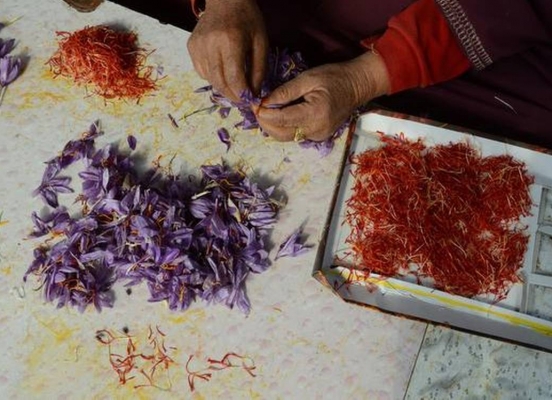
Kashmir which is also called 'Paradise on Earth' is celebrated for a ton of things including its scenic beauty, plentiful wildlife, local handicrafts, local food and one of the significant things which gets Kashmir on the global map is its famous spice and health rejuvenator 'Kashmir Saffron', which has recently received the much-awaited Geographical Indication (GI) certification by the Geographical Indications Registry.
The application for registration of "Kashmir Saffron" as a GI was filed in respect of goods under class 30. Kashmiri Saffron is cultivated and harvested in Karewa (highlands) and is believed to have been introduced in Kashmir around 1st Century BCE by Central Asian immigrants. It is the only Saffron in the world which is grown at an altitude of 1,600 metres, thus making it exceptional and remarkable from the Saffron grown in the other parts of the world.
What is Geographical Indication (GI)?
Geographical Indication is a name or sign given to certain products that relates or belongs to a specific geographical location or origins like a region, town or country. GI helps the genuine producers to earn profit in the competitive market and enables the customers to buy products having superior quality.
As per Section 2(1)(e) of the Geographical Indications of Goods (Registration and Protection) Act, 1999 a geographical indication pertains to agricultural, natural or manufactured goods, which originate and are produced/processed in a specific geographical territory, thereby associating a reputation for such territory.
Kashmiri Saffron has a rich cultural heritage and is very famous globally. It holds an immense importance in pharmaceuticals, cosmetics, perfumery and textile dye-producing industry. It is extensively used as a spice to add flavour to food and as a dye to colour foods. It has also been associated with Kashmiri food cuisine. It has also been reported that Pampore, which is the hub of Saffron in Kashmir is likely to have a bumper crop of the spice this season due to initiatives taken by the National Mission on Saffron (NMS). Under the NMS, a project of Rs 411 crore was approved by the Union government under which an area of 3,715 hectare for saffron was proposed to be rejuvenated.
Geographical Indication means any agricultural goods, natural goods or manufactured goods or any goods of handcrafted or goods of industry including the food stuffs, there is no specific law governing geographical indications of such goods, which could adequately protect the interest of producers of such goods. To prevent unauthorized persons from misusing geographical indications would protect consumers from deception and would add to the economic prosperity of the producers of such goods and would also promote goods bearing Indian geographical indications in the export market.
In order to maintain an originality of a product of particular place it is very essential for registration of geographical indication of that particular product like the Pashmina Silk of Kashmir, Agra "Petha", "Patachitra" of Odisha etc. The protection of Geographical Indications has over the years, emerged as one of the most contentious intellectual property rights issues in the global level assumes enormous significance for a country like India. Which has in its possession a number of world renowned Geographical Indications e.g. Darjeeling Tea, Alphonso, etc. Geographical Indications generally refer to any Indications that identifies a good as originating from a particular place, where a given quality reputation or other characteristics of the good are essentially attributable to its Geographical origin
It is expected that this GI certification will help farmers in getting the best remunerative price also help in preventing the prevalent practice of adulteration of Saffron. GI registration can benefit in growing income of the artisans, farmers, weavers and craftsmen by increasing the marketability and scalability of their GI products. GI also protects the unique skills and knowledge of traditional and regional practices of GI producers by promoting their GI products.

You may also like


