Economists ask PM to accelerate privatisation, undertake further bank capitalisation
Economists ask PM to accelerate privatisation, undertake further bank capitalisation

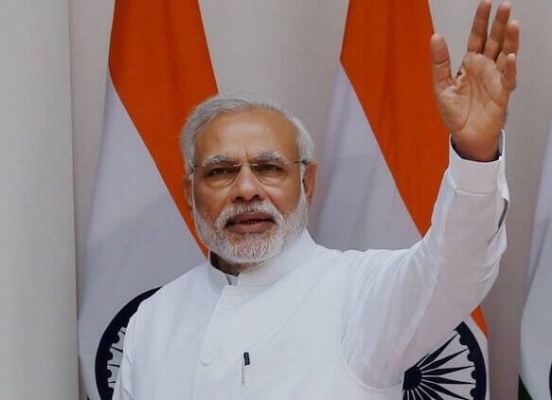
Ahead of the Budget for FY22, a group of economists have asked prime minister, Narendra Modi to rationalise direct and indirect tax regimes, undertake further bank capitalisation, accelerate privatisation and boost public spending on infrastructure projects to create jobs.
In the video conference, also attended by the finance minister Nirmala Sitharman, officials from Prime Minister’s Office, the finance ministry and Niti Aayog, economists asked for measures to bridge the gap in poverty alleviation programmes by implementing technology for better targeting and service delivery anywhere in the country. Among others, the meeting was also attended by former Niti Aayog vice-chairman Arvind Panagariya, former RBI deputy governor Rakesh Mohan and former chief economic adviser Arvind Virmani.
“To reduce tax compliance burden on small entrepreneurs, both cost of compliance and the time they spend on worrying about these issues should be reduced by simplifying and rationalizing direct and indirect tax systems,” Virmani said. He said that the Direct Tax Code with best practices should be brought in. In the goods and service tax (GST), Virmani batted for a single rate regime with no cess on more than 75 per cent of items. To boost textile product exports, he sought removal of differential rates on cotton, manmade fibre, artificial fibre, mixed fabrics, etc.
They also emphasised the need for development of acceleration of public investment in infrastructure and public goods projects, especially on construction heavy projects to create immediate jobs. With 3/4th of workforce back in labour market, the unemployment rate has risen recently.
Even though the government has announced a series of measures and stimulus packages under Aatmanirbhar Bharat initiative in 2020,it will need to keep expenditure momentum in FY22 to boost consumption and investment demand to revive economic activity.
India’s real gross domestic product (GDP) in FY21 could be 7.7 per cent lower than in FY20 and 3.9 per cent lower than even the FY19 level in absolute term, the National Statistical Office (NSO) forecast on Thursday, releasing the advance estimate for the benefit of the formulation of the Central Budget, due on February 1.
The sharpest annual GDP contraction in recorded history was caused by Covid, though a slowing phase had begun a few quarters earlier. The contraction estimated by the NSO is, however, narrower than prognosticated by various other agencies including the IMF (10.3%), World Bank (9.6 per cent) and other prominent global rating agencies, but a bit worse than RBI’s latest forecast of 7.5 per cent.

You may also like