Unlocking Liquidity: Understanding TReDS Asset-Backed Securities and Their Impact on MSMEs

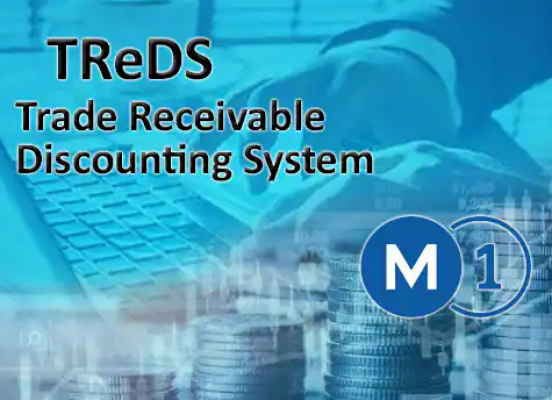
India's 7.4 crore MSMEs face a staggering ₹25-30 lakh crore credit gap, with ₹7 lakh crore stuck in delayed corporate payments. A persistent challenge faced by these businesses is from large buyers, which ties up capital and hampers growth. Enter the Trade Receivables Discounting System (TReDS), an innovative RBI-regulated platform designed to address this issue. Recently, with proposals in the Union Budget 2026, TReDS receivables are being positioned as asset-backed securities (ABS), promising a transformative leap in MSME financing. This article delves into what TReDS asset-backed securities entail and how they can empower MSMEs.
What is TReDS?
Launched in 2014 by the Reserve Bank of India (RBI), TReDS is an electronic platform that facilitates the financing and discounting of trade receivables for MSMEs. It operates as a digital marketplace where MSMEs (sellers) can upload invoices raised against large corporate or government buyers. Multiple financiers, such as banks and Non-Banking Financial Companies (NBFCs), then bid competitively to discount these invoices, providing immediate cash to the MSME at a discounted rate.
The process is straightforward and fully digital: An MSME supplier registers on a TReDS platform (like RXIL, M1xchange, or Invoicemart), uploads verified invoices, and awaits bids. Once a bid is accepted, the financier pays the discounted amount to the MSME, typically within 24 to 48 hours, while the buyer settles the full amount with the financier on the due date. This "without recourse" model shifts the credit risk to the buyer, not the MSME, making it a low-risk financing option. Since its inception, TReDS has unlocked over Rs 7 lakh crore in funding for MSMEs, proving its efficacy in bridging working capital gaps.
TReDS as Asset-Backed Securities
The game-changer introduced in Budget 2026 is the recognition of TReDS receivables as asset-backed securities. ABS are financial instruments created by pooling underlying assets, such as loans or receivables, and issuing securities backed by these assets to investors. In the context of TReDS, this means bundling discounted invoices into securitized pools that can be sold on a secondary market to institutional investors like mutual funds, insurers, and pension funds.
This securitisation process allows banks and NBFCs to offload their TReDS exposures, recycling capital to finance more MSMEs. For instance, a pool of invoices from diverse MSMEs can be structured into tranches with varying risk levels, attracting a broader investor base. The secondary market enhances liquidity, as these securities can be traded, providing quicker settlements and potentially lower funding costs. Experts note that this could infuse private capital into MSME credit, addressing India's massive credit gap, estimated at trillions of rupees, which banks alone cannot fill.
Moreover, integrating TReDS with platforms like the Government e-Marketplace (GeM) and mandating its use by Central Public Sector Enterprises (CPSEs) will standardise it as a benchmark for corporate transactions. This not only ensures faster payments but also builds trust through transparency and regulatory oversight.
How TReDS Asset-Backed Securities Help MSMEs
The primary boon for MSMEs is accelerated access to working capital without collateral. Traditional loans often require assets as security, which many small businesses lack. In TReDS, the invoice itself serves as collateral, leveraging the buyer's creditworthiness. This democratizes finance, especially for underserved segments like exporters or rural enterprises.
Competitive bidding ensures low discounting rates, often 0.25-0.40?ove prime lending rates, making it cheaper than conventional borrowing. With securitisation, increased liquidity could further drive down costs, as more capital flows in. MSMEs benefit from reduced payment delays, typically 90-120 days, shrunk to mere hours, enabling smoother operations, inventory management, and expansion.
Structurally, this fosters financial inclusion. By treating receivables as ABS, TReDS attracts institutional investors, unlocking large-scale private funding. For MSMEs, this means predictable cash flows, better credit profiles, and the ability to negotiate stronger terms with buyers. It also mitigates risks like buyer defaults, as the system is self-liquidating and payments are tied to actual transactions.
Case in point: An MSME supplier to a large corporate can upload an invoice worth Rs 10 lakh on TReDS. Financiers bid, say at 8% discount, netting the MSME Rs 9.2 lakh immediately. With ABS, the financier sells this receivable in a pool, freeing up funds to discount more invoices. This cycle amplifies credit availability.
Challenges and the Road Ahead
Despite its promise, challenges persist. Limited financier participation, with only a handful of banks actively bidding, can lead to higher costs. Awareness among MSMEs is low, and digital adoption barriers exist in remote areas. Regulatory tweaks, like credit guarantees via CGTMSE, aim to boost participation.
Looking forward, securitisation could catalyse a structural shift, drawing parallels with global models like Mexico's NAFIN program. By 2030, experts predict TReDS could handle trillions in transactions, propelling MSME growth.
TReDS asset-backed securities represent a pivotal evolution in MSME financing, converting receivables into liquid, investable assets. For India's small enterprises, this means not just survival but thriving in a competitive economy. As the ecosystem matures, it holds the potential to drive inclusive growth, one discounted invoice at a time.

You may also like