Section 43B(h) of the Income Tax Act: A Boon for MSMEs

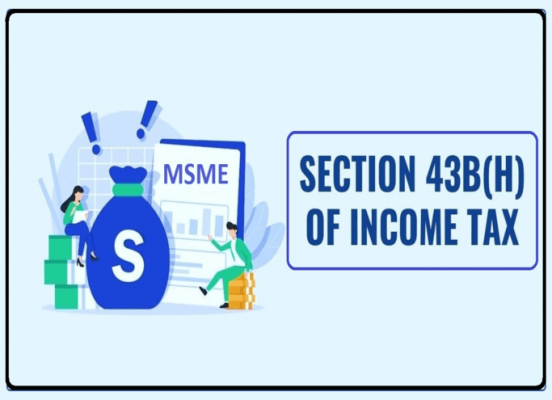
The introduction of Section 43B(h) in the Income Tax Act has brought a wave of relief for Micro, Small, and Medium Enterprises (MSMEs) in India. This provision, which aims to ensure timely payments to MSEs, has had a significant positive impact on their liquidity and overall competitiveness.
Under Section 43B(h), if a buyer fails to make payments to micro or small enterprises (MSEs) within the specified time frame of 45 days (for written agreements) or 15 days (in the absence of a written agreement), the pending amount will be considered as income, and the buyer will be liable to pay tax on it. Additionally, the buyer will have to pay compound interest at a rate three times the bank rate notified by the Reserve Bank of India (RBI).
MSMEs have embraced Section 43B(h), as it has alleviated the burden of chasing payments and has significantly improved their liquidity position. In the past, delayed payments often led to cash flow issues, hampering the ability of MSMEs to operate efficiently and take on new orders. With the implementation of this provision, MSMEs have regained their confidence in the business, which gives them enough working capital, and helps in procuring raw material on time.
The savings on man hours previously spent on pursuing outstanding payments have been substantial, enabling MSMEs to redirect their efforts towards core business activities and growth initiatives. This increased liquidity has also empowered MSMEs to expand their operations, invest in new technologies, and explore new market opportunities, further contributing to their overall competitiveness.
While the benefits of Section 43B(h) have been widely acknowledged, a few industries have faced challenges in adapting to the new rule. However, it might take some time but this clause will prove itself to be a boon for MSMEs in the long run as:
- Implementation of this provision will result in improved cash flow of MSEs as timely payments from medium and large enterprises can significantly aid their sustainability, improve the ability to re-invest in business growth, and procure necessary resources without relying on interest bearing and collateral based cash credit loans and improve financial stability of MSEs, contributing to a healthy MSE ecosystem.
- This provision will ultimately help mitigate unfair trade practices, as medium and large enterprises would face consequences for exploiting their dominant position and level the playing field, empowering MSEs to deal with retaliation or payment delays.
- This provision will enhance trust and create best practices of fair trade and dealing between buyers and MSEs, leading to stronger business relationships and collaborations in the long run.
- The provision strengthens the bargaining power of MSEs when negotiating payment terms with larger enterprises. MSEs can confidently push for payments within 15 days or 45 days in case of a written agreement, knowing the consequences of delayed payments
- MSEs often struggle to obtain loans and growth capital from banks and NBFCs due to the requirements of collateral, which is why receiving timely payments from Large and Medium Enterprises are even more crucial. Delayed payments can lead to a cash crunch, affecting the MSEs ability to pay suppliers and employees, and ultimately leading to business failure. On the other hand, large enterprises have easier access to loans, making it essential for them to prioritize timely payments to MSEs for their continued growth and success.
Overall, Section 43B(h) of the Income Tax Act is a game-changer for MSMEs in India. By ensuring timely payments and improving liquidity, this provision will not only alleviate financial burdens but has also foster an environment conducive to the growth and success of these enterprises, which play a vital role in the nation's economic development.

You may also like